
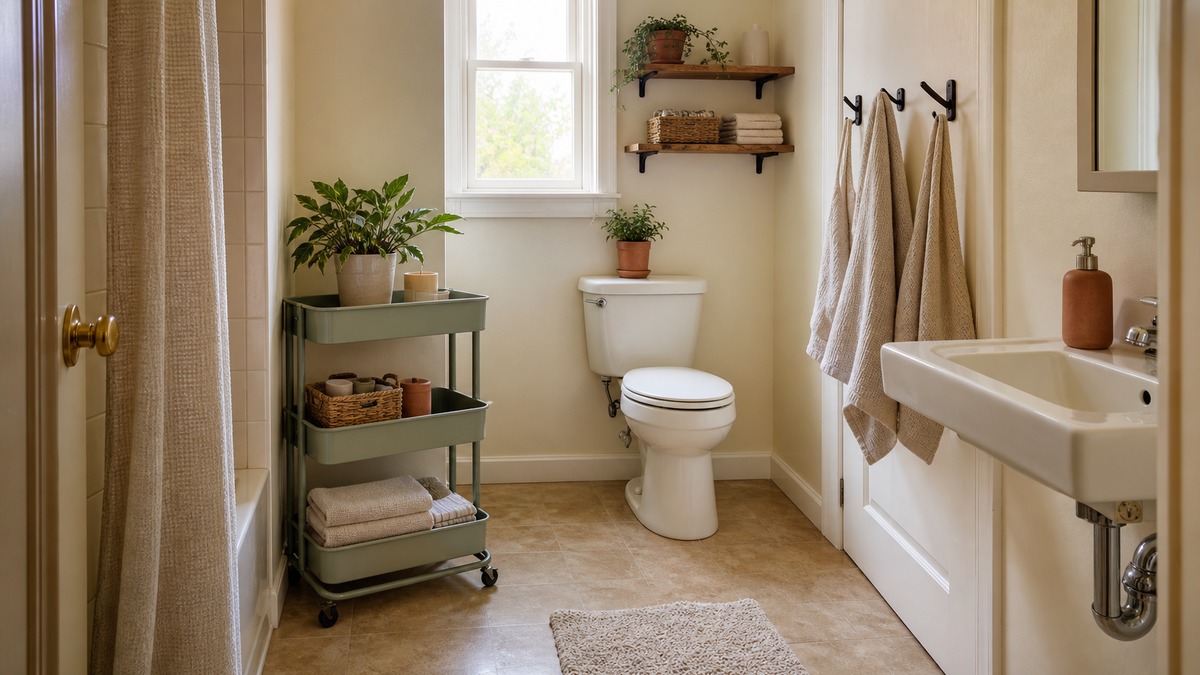
When the sink has no vanity and every bottle lands on the floor, small bathroom storage without cabinets has to use open, reachable zones. This guide gives you 12 ideas, a no-cabinet zone planner, and a fit check to run before buying anything.
Fast win: Spend 10 minutes moving daily toiletries into one washable basket, then choose its home from the 12-row planner below. Keep the floor path clear and spend $0 until you know which wall, door, or portable zone can hold more.
The No-Cabinet Bathroom Zone Planner: first 4 moves
| # | Available zone | Storage move | Best for | Check first |
|---|---|---|---|---|
| 1 | Clear wall | One shallow open shelf | Daily bottles | Lease and wall material |
| 2 | Back of door | Hooks or a slim rack | Robe and dry towels | Door swing and latch |
| 3 | Above toilet | Open shelf or stable étagère | Extra paper and towels | Reach and mounting needs |
| 4 | Empty corner | Lidded hamper | Laundry only | Walking and cleaning path |
| 5 | Beside sink | Washable tray | Hand soap and two daily items | Splash exposure |
| 6 | Narrow floor gap | Rolling cart | Toiletries in small bins | Wheel locks and clearance |
| 7 | Shower edge | Hanging shower caddy | In-shower products | Drainage and fixture load |
| 8 | Towel-bar area | S-hooks, if the bar allows them | Washcloths | Bar strength and crowding |
| 9 | Window ledge | One water-resistant tray | Non-sensitive daily items | Condensation and sunlight |
| 10 | High wall | Labeled open baskets on a shelf | Backstock | Safe reach and secure shelf |
| 11 | Portable zone | Handled caddy | Shared or travel-size toiletries | Dry storage between uses |
| 12 | Beside toilet | Compact freestanding paper holder | One spare roll | Full floor footprint |
All 12 moves stay outside cabinets. If you have enclosed space beneath the sink, use the separate guide to under-bathroom-sink organization ideas rather than mixing those tactics into this plan.
Run the 6-Inch Clearance Test before adding floor storage
A cart that fits the gap can still block the door, your knees, or the mop. Cut a 6-inch-wide strip from a paper bag. Tape the proposed cart footprint on the floor, then use the strip as a visible buffer for four movements.
- Open the bathroom door fully and confirm it doesn’t hit the taped footprint.
- Sit and stand at the toilet without your knees or feet meeting the outline.
- Walk from the door to the sink and shower without turning sideways.
- Move a mop or cloth around the whole footprint without lifting the unit.
This strip is a shopping screen, not a building-code measurement or safety guarantee. If any movement fails, choose a wall, door, or portable option. Record the cart’s width and depth; “slim” doesn’t prove it fits.
12 small bathroom storage without cabinets ideas
1. Put one shallow shelf on a clear wall
Choose shelf depth from your measured wall space and bottle size. Check the lease before drilling. Keep heavy bulk bottles elsewhere unless the hardware and wall support the stated load.
2. Use the back of the door
Try two over-door hooks for a robe and dry towel. The door should latch without rubbing the frame. In a rental, check the hook thickness and lease before adding screws.
3. Claim the wall above the toilet
One open shelf can hold spare toilet paper and folded hand towels. Keep daily items lower. For a tall freestanding étagère, follow its instructions and review the CPSC Anchor It guidance about securing furniture to reduce tip-over risk.
4. Give the empty corner one job
Use a lidded hamper for laundry instead of stacking supplies. One job keeps damp towels away from paper goods and toiletries. Confirm the lid opens without striking the sink or wall.
5. Limit the sink edge to a washable tray
Place hand soap plus two daily items on a tray that lifts in one motion. This keeps the rim from collecting every bottle. Choose a washable tray and dry beneath it during cleaning.
6. Add a narrow rolling cart only after taping its footprint
A three-tier cart can separate hair products, skin care, and washcloths. Run the 6-Inch Clearance Test first, and favor locking wheels. Don’t park it where a wheel can enter the doorway.
7. Keep shower products on a draining caddy
Choose a caddy made for the fixture or wall and follow its load directions. Keep only this week’s bottles there; duplicates can stay in a dry portable caddy. Let the shower caddy drain.
8. Add S-hooks only to a suitable towel bar
If the bar is secure and the hook fits without scraping, use one or two S-hooks for washcloths. Stop if the bar shifts. Never hang a loaded basket from hardware not rated for it.
9. Use a window ledge carefully
A water-resistant tray can hold a comb if the ledge stays dry. Skip medicines, paper, and items affected by sun or condensation. Check for moisture behind the tray.
10. Put backstock high, but keep it light
A labeled basket on a properly installed shelf can hold toilet paper or washcloths. Keep everyday items lower. If a step stool becomes another floor obstacle, move backstock to a nearby closet.
11. Build a portable toiletries caddy
Give each person a washable caddy for deodorant, hair care, and daily items. Return it to a dry hall or bedroom shelf. A simple cleaning caddy checklist uses the same portable logic, but cleaning products stay separate.
12. Use a compact freestanding toilet-paper holder
A one-roll stand can add a spare without drilling if its full base passes the clearance test. Skip decorative stands with wide bases when they crowd feet or cleaning access. Keep it away from direct shower splash.
Use the $0 / About-$20 / About-$50 Storage Ladder
Prices vary by store, location, material, and sales. Treat these as planning examples, and buy only for a zone that passed the clearance, moisture, and permission checks.
| Budget level | Conditional example | What it solves | Skip it when |
|---|---|---|---|
| $0 first | Reuse a washable tray, small basket, and labeled box | Sink edge plus portable backstock | Containers trap moisture or don’t wipe clean |
| About $20 | Example: over-door hooks plus two small washable bins | Door storage and item grouping | The door won’t latch or hooks rub the frame |
| About $50 | Example: narrow rolling cart, if current local prices allow | Movable storage for several categories | Its taped footprint blocks movement |
Worked example: about $12 for hooks plus about $8 for two bins equals about $20 before tax, if those prices are available. Your total may be lower or higher. A $0 setup beats a $50 cart that pinches the walking path.
Choose renter-safe mounting by lease and load
“Removable” doesn’t automatically mean damage-free or lease-approved. Paint age, humidity, wall texture, load, and removal method can change the result. Read your lease, ask the landlord when required, and follow the mounting product’s surface and weight directions.
Use over-door hardware only when the door closes freely. Keep adhesive hooks within label directions. Shelves or tall furniture may need approved anchoring, making a portable caddy the simpler rental choice.
Keep moisture, towels, and medicine in the right zones
The EPA recommends keeping indoor humidity below 60%, ideally between 30% and 50%, to help prevent mold growth. Its guide to moisture and mold control also says to dry wet areas and items within 24 to 48 hours.
Give wet towels air space. Keep paper backstock away from splash and condensation. Follow medicine labels; use another appropriate location when a label calls for a cool, dry place.
Fix 4 layout mistakes in bathrooms under 50 square feet
- Buying before measuring: Tape the full width and depth on the floor, then open every door and drawer that swings into the area.
- Using every vertical inch: Keep daily items reachable. Move light backstock to a nearby closet using the same measure-first approach in this small closet organization plan.
- Mixing wet and dry storage: Put shower bottles on a draining caddy and paper goods in the driest available zone.
- Adding too many tiny containers: Use one tray per surface or one bin per cart tier. Fewer pieces are easier to lift and clean around.
FAQ
How do you add bathroom storage when there are no cabinets?
Map the clear wall, back of door, toilet wall, floor gap, and portable zones first. Pick one of the 12 moves only after checking the lease, moisture exposure, and the item’s full footprint.
Where should toiletries go in a bathroom with no vanity?
Keep two or three daily items on a washable sink tray, shower products on a draining caddy, and the rest in a handled toiletries caddy. Return the caddy to a dry shelf outside the bathroom if steam or crowding is a problem.
What bathroom storage works for renters without drilling?
A portable caddy, washable tray, or compatible over-door hooks may work without drilling. Still check the lease, door clearance, product load limits, and removal directions; “removable” isn’t a promise that paint will stay intact.
Can a narrow rolling cart fit beside a toilet safely?
Measure the cart’s width and depth, tape that footprint on the floor, and run all four movements in the 6-Inch Clearance Test. If it blocks the door, knees, feet, walking path, or cleaning access, don’t place it there.
Final takeaway: protect the walking path first
A bathroom with no cabinets doesn’t need storage on every blank inch. Keep the door swing, route to the shower, toilet space, vents, and cleaning access clear; then assign one dry, reachable home to each remaining category.