
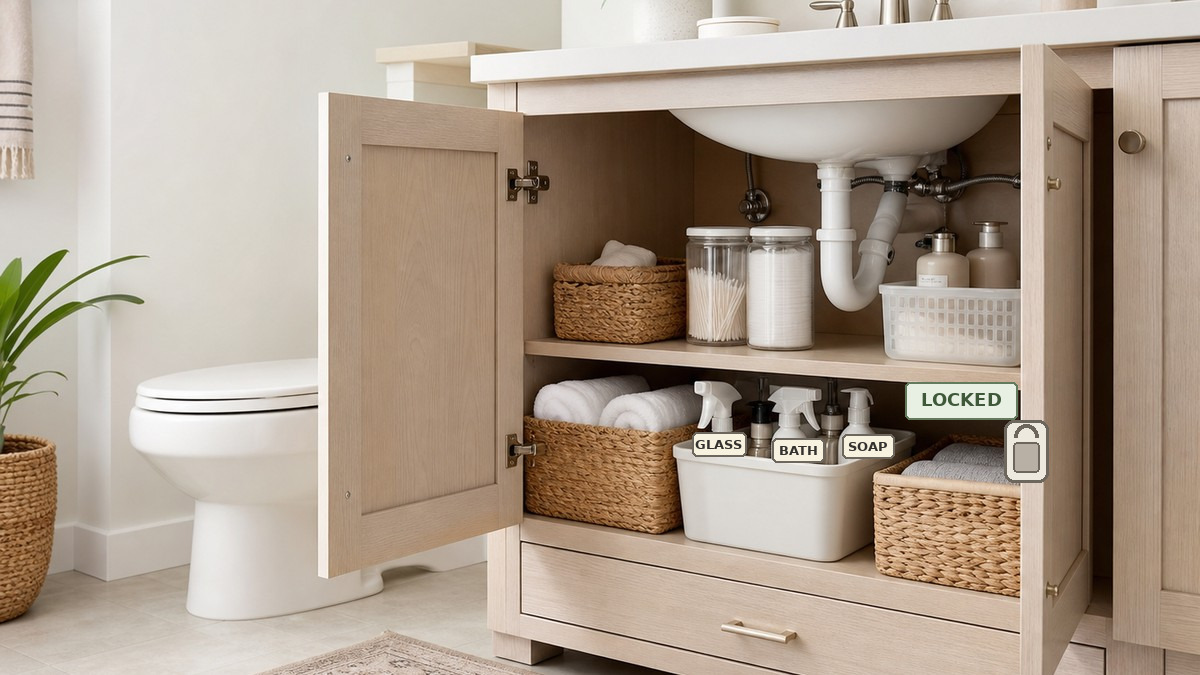
Under Bathroom Sink Organization Ideas: Remove, Then 3 Zones
Under bathroom sink organization works best when the cabinet has zones, not when it is filled with random bins. Start by separating daily items, backup supplies, and cleaning products so you can see what should stay in the bathroom.
Fast win: Empty only the front half of the cabinet for 15 minutes. Remove trash and duplicates first as a separate action, then create three storage zones: daily grab, backstock, and cleaning/maintenance. Keep cleaning products away from kids and pets, and do not store mystery bottles under the sink.
Under Bathroom Sink Organization Ideas: 3 Storage Zones
| Zone | What Goes There | Keep It Small By |
|---|---|---|
| daily grab | hair brush, skincare, floss, contact items | one open item per type |
| backstock | extra soap, toothpaste, toilet paper | one row, not a pile |
| cleaning/maintenance | bathroom cleaner, gloves, extra sponge | labeled and separated |
REMOVE FIRST is the setup action, not a fourth storage zone. Clear expired products, empty boxes, and duplicates before assigning what remains to the three zones. This map gives the cabinet a job. A small bathroom cabinet cannot be a beauty drawer, cleaning closet, bulk storage area, and random product graveyard at the same time.
What to Remove First
Use this checklist before buying organizers.
| Item | What to Do |
|---|---|
| empty boxes | recycle them and keep the product only if needed |
| expired skincare or medicine | dispose of safely according to label/local guidance |
| duplicates | keep one open, move unopened extras to backstock |
| mystery bottles | identify or remove; do not mix products |
| items used in another room | relocate to where you actually use them |
| leaky products | wipe cabinet and store upright or discard |
The fastest under-sink upgrade is often subtraction. Removing five items can do more than adding a new bin.
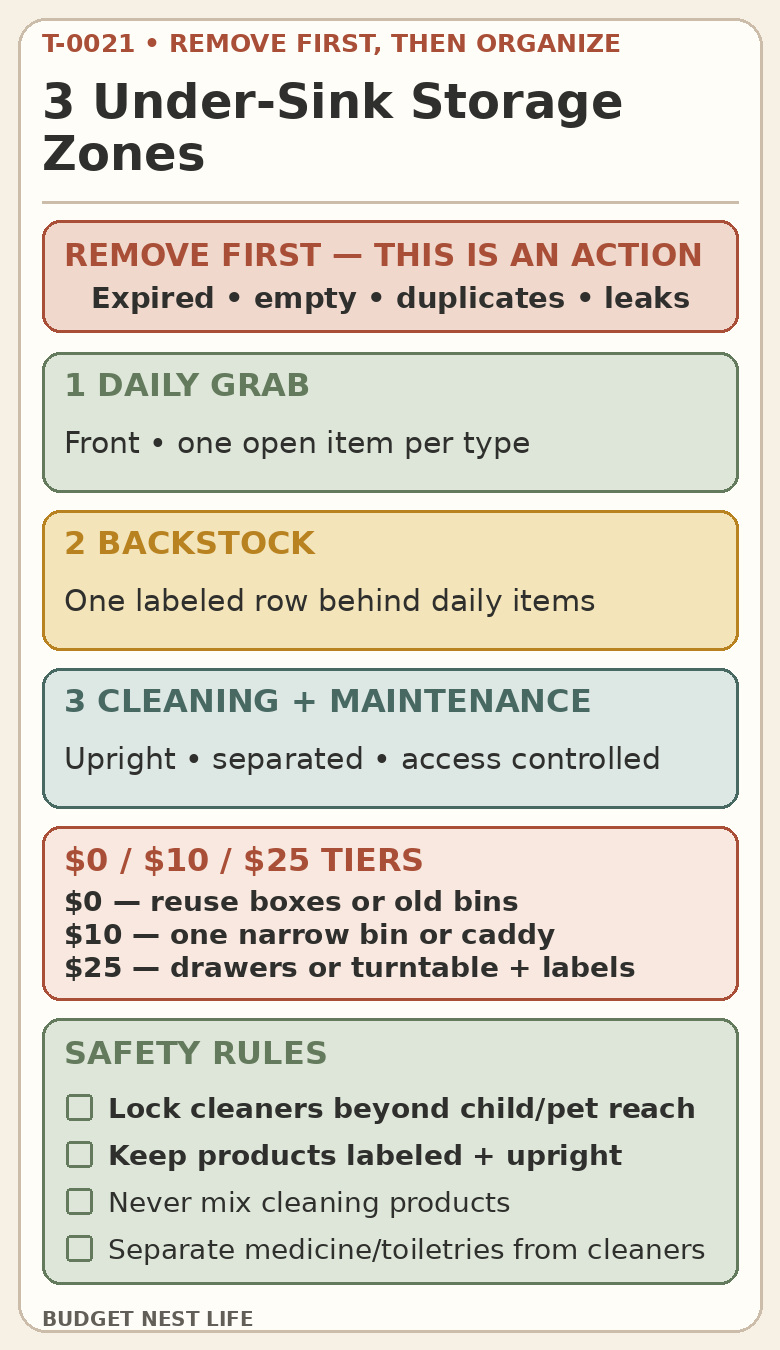
$0 / $10 / $25 Upgrade Tiers
| Budget | What to Use | Best For |
|---|---|---|
| $0 | shoe boxes, jars, old bins, rubber bands | testing zones before buying |
| $10 | one narrow bin or small caddy | daily items or cleaning supplies |
| $25 | stackable drawers or a turntable plus labels | deep cabinets with wasted vertical space |
Do not buy a full organizer set before measuring the pipes, cabinet width, and door clearance. Under-sink cabinets have awkward plumbing, and the “perfect” bin can block the exact space you need.
Small Cabinet Layout Ideas
For a very narrow cabinet
Use one caddy for daily items and one small backstock row. Keep cleaning products somewhere else if the cabinet cannot safely separate them.
For a deep cabinet
Use a front bin for daily items and a back bin for extras. Put a sticky note or label on the front bin listing what is behind it.
For a cabinet with pipes in the middle
Use two side zones instead of one big bin. Put tall bottles on one side and shorter items or drawers on the other.
For renters
Choose removable bins, tension rods, or adhesive-free labels. Avoid anything that damages cabinet surfaces.
Safety Notes for Cleaning Products
Bathroom cabinets often hold cleaners, personal care items, and sometimes medicine. Keep safety visible.
| Safety Issue | Better Rule |
|---|---|
| kids or pets can access cabinet | use a safer storage location or lock |
| unlabeled cleaner | do not keep it |
| products stored on side | store upright to prevent leaks |
| cleaners mixed together | never combine products |
| medicine mixed with cleaners | separate completely |
For safer product choices, the EPA Safer Choice program can be a helpful reference. Follow product labels first.
The One-Open Rule
For small bathroom storage, keep one open item per type:
- one toothpaste
- one face wash
- one lotion
- one hair product category
- one bathroom cleaner
- one pack of wipes or cleaning cloths
Unopened extras can go in the backstock zone. This rule prevents three half-used products from taking over the daily area.
What to Measure Before Buying an Organizer
Measure before you shop, especially around pipes.
| Measurement | Why It Matters |
|---|---|
| cabinet width | tells you whether one bin or two side bins fit |
| cabinet depth | prevents bins from blocking the door |
| pipe location | decides where drawers can go |
| vertical height | shows whether stackable drawers make sense |
| door clearance | avoids organizers that hit hinges or pipes |
Write the numbers in your phone. A $25 organizer is not a bargain if it blocks the plumbing or wastes the front half of the cabinet.
Product Limit Rule for a Small Bathroom
Small cabinets stay usable when each category has a limit.
| Category | Limit to Try |
|---|---|
| toothpaste | 1 open + 1 backup |
| skincare | daily items only in front |
| hair products | one small bin |
| toilet paper | one visible stack, bulk elsewhere |
| cleaning supplies | one cleaner, gloves, cloth or sponge |
Limits are not about being minimal. They stop the cabinet from storing future purchases instead of current-use items.
If You Share the Bathroom
Shared cabinets need labels more than extra bins.
| Shared Problem | Simple Fix |
|---|---|
| everyone has products mixed together | one small bin per person |
| backstock disappears | one labeled backup row |
| cleaning products crowd daily items | separate cleaner zone or move cleaners out |
| morning traffic | keep daily grab items at the front |
A shared bathroom fails when nobody knows what belongs where. Labels reduce daily decisions.
Common Mistakes
Buying bins before measuring
Measure width, depth, height, and pipe location. A bin that fits the shelf but blocks the pipe is not useful.
Storing everything under the sink
If you do not use it in the bathroom weekly, question whether it belongs there. Backstock can live in a linen closet, hallway bin, or another labeled space.
Hiding daily items behind extras
Daily items should be front and easy to grab. Backstock can be behind them if it is labeled.
Ignoring leaks
Under-sink cabinets can hide moisture. If you see a leak, handle the maintenance issue before adding organizers.
Items That Usually Do Not Belong Here
Some items make the bathroom cabinet harder to use.
| Item | Better Place |
|---|---|
| bulk paper goods | linen closet, hallway shelf, or labeled bin |
| extra makeup you rarely use | vanity drawer or donation/trash decision pile |
| old travel bottles | travel bag or discard if expired |
| duplicate cleaning refills | household cleaning shelf |
| tools and repair parts | maintenance bin |
Removing these items creates more space than adding a second organizer.
Pair It With a Simple Cleaning Routine
Keep one small cleaning caddy or bathroom cleaning set if the cabinet is safe for it. This works well with a simple cleaning schedule because the cleaner, cloth, and gloves stay together. If you prefer one home-wide caddy, keep it separate from bathroom backstock so the under-sink cabinet does not become a mixed cleaning closet.
If towels, hair tools, or unopened personal-care extras are taking over the cabinet, use these small closet organization ideas on a budget to create a separate home for them. Moving those categories out protects the daily-grab zone for items used at the sink.
10-Minute Maintenance Rule
Once a week, open the cabinet and remove anything that drifted into the wrong zone. Put daily items back in front, move unopened extras to backstock, and wipe any sticky spots. Ten minutes prevents the cabinet from turning back into a pile.
Small Bathroom Budget Example
Start with the smallest setup that tests the zones. For an illustrative planning scenario, assign $1.25 to one basic daily-items bin and $8 to one narrow backstock basket, then reuse labels you already own; the shown total is $1.25 + $8 = $9.25. These are example allocations, not dated store prices. If the pipe cuts through the middle of the cabinet, two small side bins usually work better than one large drawer.
FAQ
What should I store under a bathroom sink?
Store daily bathroom items, limited backstock, and safely separated cleaning or maintenance supplies. Avoid turning the cabinet into a catch-all for medicine, old products, and random extras.
How do I organize under a bathroom sink with pipes?
Use two side zones instead of one large organizer. Put tall bottles on one side and a small drawer, basket, or caddy on the other.
What is the cheapest way to organize a small bathroom cabinet?
Start with $0 containers you already own, remove duplicates, and test the daily/backstock/cleaning zones for a week. Buy one narrow bin only after you know which zone fails.
Should cleaning products be stored under the bathroom sink?
Only if they can be stored safely, upright, labeled, and away from children and pets. Follow product labels and never mix cleaners.
Final Takeaway
Under bathroom sink organization is a zone problem before it is a bin problem. Create daily, backstock, and cleaning zones first, then buy only the organizer that fixes the space that still fails.