
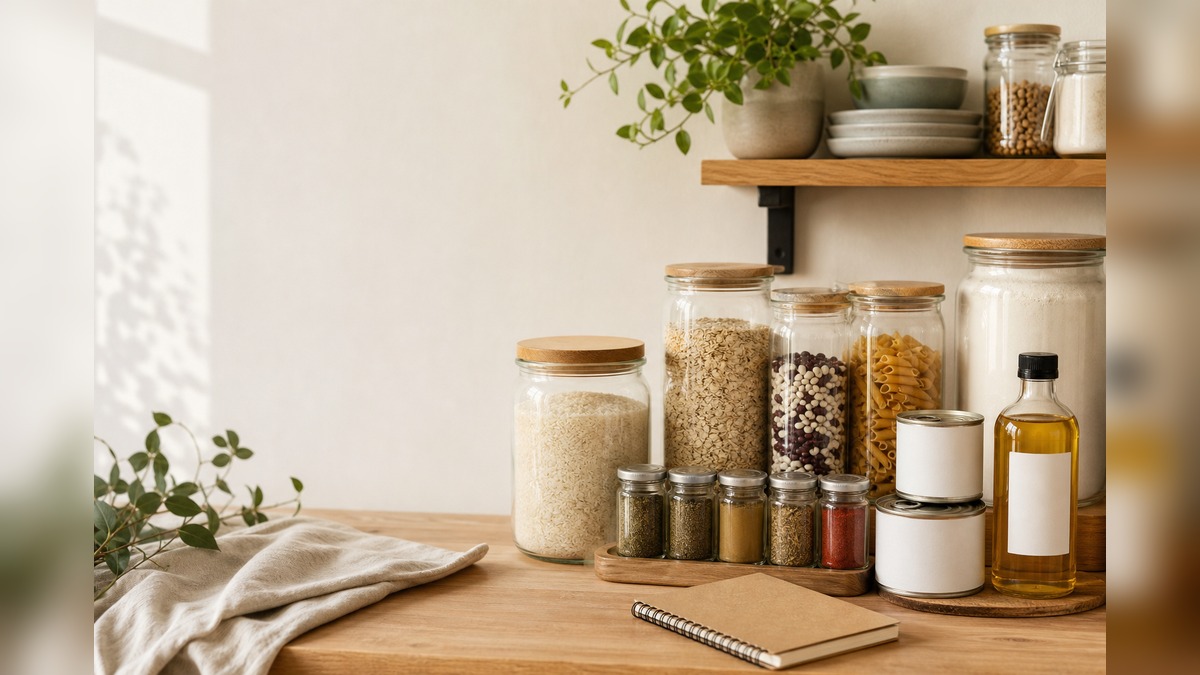
If your pantry has random cans but no easy dinner, build pantry staples on a budget in a clear order: meal bases first, protein helpers second, flavor third. A first $25 stock-up can cover simple bowls, pasta, soup, oatmeal, and backup meals before you add specialty ingredients.
Quick answer: Start with rice, pasta, oats, beans, canned tomatoes, peanut butter, broth, tortillas or potatoes, frozen vegetables, and one basic seasoning. At Aldi or Walmart, this first pantry round can often stay near $25-$35 depending on brands and local prices. Do not buy bulk bags, fancy sauces, or baking supplies until each item can help make at least 3 meals.
First $25 Pantry Staples to Buy
| Priority | Staple | Why It Earns Space | Easy Backup Meal |
|---|---|---|---|
| 1 | rice | cheap base for bowls, soup, and leftovers | rice + beans + salsa |
| 2 | pasta | fast dinner with canned tomatoes or vegetables | tomato pasta skillet |
| 3 | oats | breakfast, snacks, and no-cook overnight oats | oats + peanut butter |
| 4 | beans or lentils | low-cost protein helper | bean soup or wraps |
| 5 | canned tomatoes | turns staples into sauce, chili, or soup | pasta + tomatoes |
| 6 | peanut butter | breakfast, snacks, and backup protein | toast or oatmeal topping |
| 7 | broth or bouillon | makes rice, soup, and beans taste planned | quick vegetable soup |
| 8 | frozen vegetables | prevents “nothing fresh” dinners | fried rice or soup |
This starter list is not about owning a huge pantry. It is about having enough meal parts to avoid a last-minute $35 takeout order or an extra grocery run for one missing dinner.
Use the Budget Pantry Ladder
The Budget Pantry Ladder is the order to follow when money is tight. Each tier should make the lower tier more useful, not just make the shelf look fuller.
| Pantry Ladder Tier | Approx. Spend | What to Add | Meals It Helps Make |
|---|---|---|---|
| First round | $25-$35 | rice, pasta, oats, beans, canned tomatoes, peanut butter, broth | bowls, oatmeal, soup, pasta, wraps |
| Second round | $20-$30 | tortillas, potatoes, flour, oil, salsa, frozen vegetables | quesadillas, potato hash, pancakes, fried rice |
| Third round | $30-$50 | lentils, tuna or canned chicken, basic spices, shelf-stable milk, pasta sauce | chili, tuna pasta, curry-style bowls, casseroles |
| Later upgrades | flexible | nuts, extra sauces, baking chocolate, specialty grains | variety after basics are working |
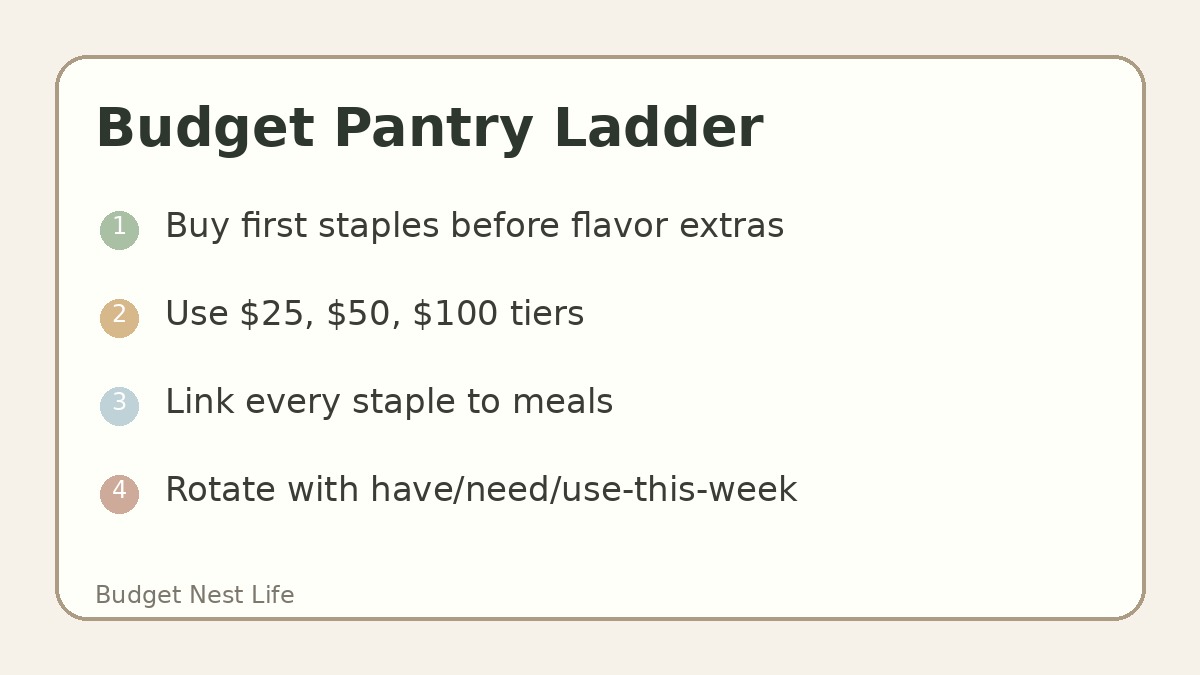
If you only have $10 this week, buy one base, one protein helper, and one flavor item. For example: pasta, lentils, and canned tomatoes. That is more useful than three interesting sauces with no meal underneath them.
Pantry Staples on a Budget Need Meal Jobs
A pantry staple should have a job before it gets shelf space. The job can be breakfast, dinner base, protein helper, flavor builder, snack backup, or emergency meal. If you cannot name the job, wait to buy it.
Use this quick “meal job” check before a stock-up trip:
- What meal will this item help make in the next 30 days?
- What do I already own that goes with it?
- Will my household actually eat it?
- Does it need a storage container I do not have?
- Is there an open version already hiding on the shelf?
This prevents the classic budget pantry mistake: buying ingredients for an imaginary version of your life. A 10-pound bag of flour is not a bargain if you rarely bake, do not own yeast, and end up pushing the bag behind cereal for 8 months.
The 3-Meal Test Before You Stock Up
The 3-Meal Test is the easiest way to decide whether an item belongs in a tight pantry. Before buying a bigger size at Costco, Sam’s Club, Walmart, or a warehouse sale, name three meals it can help make.
| Item | Meal 1 | Meal 2 | Meal 3 | Buy Now? |
|---|---|---|---|---|
| rice | bean bowls | fried rice | chicken soup | yes |
| canned tomatoes | pasta skillet | chili | vegetable soup | yes |
| tortillas | bean wraps | quesadillas | breakfast tacos | yes |
| coconut milk | curry | soup | oatmeal | maybe, if you use it |
| specialty vinegar | dressing | marinade | sauce | wait unless planned |
A good budget pantry is not the biggest pantry. It is the pantry where normal ingredients combine into several meals you would actually cook on a tired Tuesday.
Build Cheap Backup Meals, Not Just a Pretty Shelf
The reason to keep pantry staples on a budget is not to collect jars. It is to make backup meals easier than another errand. Start with combinations that take 10 to 20 minutes and use one pan when possible.
| Staple Combo | 10-20 Minute Meal | Add If You Have It |
|---|---|---|
| rice + beans + salsa | rice bowl or bean skillet | cheese, eggs, frozen corn |
| pasta + canned tomatoes | tomato pasta | tuna, spinach, Italian seasoning |
| oats + peanut butter | oatmeal bowl | banana, cinnamon, yogurt |
| potatoes + eggs | breakfast hash | onion, peppers, leftover meat |
| lentils + broth | quick lentil soup | carrots, canned tomatoes, rice |
| tortillas + beans | quesadillas or wraps | salsa, cheese, cabbage |
Keep this matrix near your grocery list. It helps you shop for meal parts instead of buying random “good deals” that do not work together.
Store Anchors: Where Budget Pantry Staples Usually Fit
Prices vary by city, season, and store, so treat these as planning anchors, not guarantees. Aldi is often useful for rice, oats, beans, peanut butter, canned tomatoes, tortillas, and frozen vegetables. Walmart can be helpful when you need one pickup order with pantry, household supplies, and pet items together. Dollar Tree can work for a small bottle of seasoning or a single emergency can, but check unit prices because small packages are not always cheaper.
Target is better for pantry items when you already have a Circle offer, gift card, or pickup order that prevents impulse aisles. Costco can be useful for rice, oats, and peanut butter only if your household will finish the larger size before it gets stale or crowded.
If storage space is tight, choose smaller packages even if the unit price is a little higher. A tiny apartment pantry that stays visible saves more money than a bulk box that hides duplicates.
What Not to Buy Yet
Some items look like pantry staples but do not belong in the first round. Wait on them until your basic meals are working.
| Wait-On Item | Why It Can Waste Money | Buy Later When |
|---|---|---|
| large spice sets | many jars go unused | you know your 5 most-used flavors |
| specialty flours | need specific recipes | you bake that recipe monthly |
| bulk snack boxes | snacks replace meal ingredients | meals and lunches are covered |
| fancy sauces | easy to collect, hard to finish | one sauce fits 3 meals |
| duplicate canned goods | hides what you already own | pantry inventory shows a true gap |
The best first pantry is a little boring on purpose. Boring staples become useful when they turn into multiple dinners.
Small-Space Storage Rules That Prevent Waste
A budget pantry can lose money when items expire, spill, or get buried. Use simple visibility rules before buying bins.
- Put older items in front and newer items behind them.
- Write the open date on oats, flour, rice, peanut butter, and broth.
- Keep one “use this week” spot for open packages and nearly empty items.
- Store heavy bags low so they do not fall or tear.
- Keep snacks separate from dinner staples so they do not hide meal ingredients.
For food safety and storage questions, use Nutrition.gov safe food storage resources as a starting point. Follow the package label and local guidance for storage, shelf life, and when to throw food away.
If you are working with a narrow cabinet, pair this with how to organize a small pantry. Organization matters most when it helps you see rice, beans, pasta, and open packages before you shop again.
A Realistic $35 Starter Pantry Example
Here is a practical starter cart for a renter, student, couple, or small family that wants backup meals without a huge stockpile. Adjust for allergies, dietary needs, and what your household already eats.
| Meal Job | Starter Items | Example Use |
|---|---|---|
| Breakfast | oats, peanut butter, bananas if buying fresh too | oatmeal bowls or toast topping |
| Dinner base | rice, pasta, potatoes or tortillas | bowls, pasta, wraps, hash |
| Protein helper | dry lentils, canned beans, eggs if refrigerated | soup, quesadillas, fried rice |
| Sauce/soup base | canned tomatoes, broth or bouillon | chili, pasta sauce, soup |
| Vegetable backup | frozen vegetables | fried rice, soup, pasta add-in |
| Flavor | one seasoning you use often | chili powder, garlic powder, or Italian seasoning |
Before adding snacks, drinks, or specialty ingredients, check whether this cart creates at least five backup meals. If it does, you have the foundation.
How Pantry Staples Connect to the Grocery Budget
Pantry staples lower stress when they support your grocery categories. They should not become a second, invisible grocery budget.
One simple setup is to keep pantry staples inside your normal grocery number, then set a small stock-up line when money allows. For example, if your weekly grocery target is $100, you might use $85 for fresh food and regular meals, then $15 for pantry rebuild items. On a tighter week, the stock-up line can drop to $0.
If your spending feels blurry, use grocery budget categories to separate meal staples, snacks, household supplies, and special meals. Pantry staples should mostly live in the meal staples bucket, not the treat or impulse bucket.
For longer grocery plans, this pantry foundation helps the two-week grocery list system work because days 11-14 need shelf-stable and freezer backups.
Common Pantry Stock-Up Mistakes
Buying bulk before testing the meal
Try the small bag or single can first. If your household eats it twice in a month, then consider a larger size.
Copying someone else’s pantry list exactly
A budget pantry for a family that eats rice daily will look different from one for a household that prefers potatoes, tortillas, or pasta. Build around meals you repeat.
Forgetting flavor
Rice, beans, oats, and pasta are useful, but flavor keeps them from feeling like punishment. One seasoning, salsa, broth, or canned tomatoes can make basics easier to repeat.
Letting snacks crowd out dinner staples
Snacks are fine when they are planned. The problem is when chips, cookies, and drinks hide the beans, rice, pasta, and backup meal parts you bought to save money.
FAQ
What are the cheapest pantry staples to buy first?
Rice, pasta, oats, beans, lentils, canned tomatoes, peanut butter, broth or bouillon, potatoes, and frozen vegetables are strong first choices. Pick the ones your household already eats before buying bulk sizes.
How much should I spend to start a budget pantry?
A useful first round can start around $25-$35 if you buy meal bases, protein helpers, and one flavor item. If money is tight, start with $10 and buy only items that combine into one or two real meals.
Are canned or dry beans better for a budget pantry?
Dry beans often cost less per serving, but canned beans are faster. If busy nights lead to takeout, canned beans can still save money because they make a 10-minute meal possible.
How do I keep pantry staples from expiring?
Keep older items in front, write open dates on long-lasting packages, and plan one pantry meal before each stock-up trip. Do not buy a second item until the first one is visible and has a meal job.
Final Takeaway
Pantry staples on a budget should make dinner easier, not turn your shelf into a storage project. Start with the first $25-$35 of meal-building basics, use the 3-Meal Test before buying more, and let every staple earn its space by helping with real backup meals.