
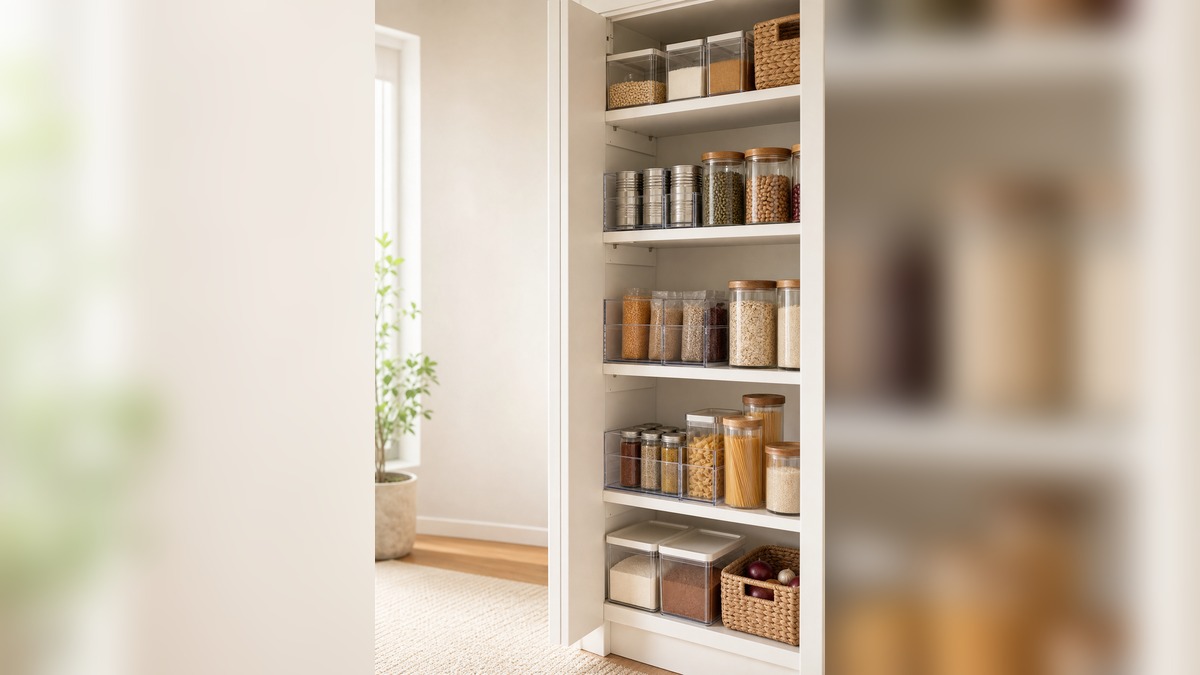
If your small pantry looks full but dinner still feels hard, start by giving each shelf one job. In 30 minutes, you can make a one-cabinet pantry easier to shop from, cook from, and reset without buying a matching container set.
Fast win: Pull out only the foods on one shelf, make one visible “use first” spot for opened items, and put daily basics at eye level. Spend $0 today; if one problem repeats all week, limit the fix to one $1.25 Dollar Tree basket or one small bin you already own.
Tiny Pantry 5-Zone Shelf Map
| Pantry zone | Put here first | Best small-space spot | Budget note |
|---|---|---|---|
| Daily basics | oats, rice, pasta, coffee, bread | eye level or easiest shelf | no bin unless packages fall over |
| Meal builders | beans, tomatoes, broth, tuna | middle shelf | group by dinner type |
| Use-first food | open pasta, older cans, snack ends | front of the shelf | a shoebox works first |
| Snacks | crackers, bars, chips, nuts | one basket or shelf strip | stop buying when full |
| Backstock | unopened duplicates | back row or lower shelf | check before shopping |
How to Organize a Small Pantry With Fewer Decisions
A small pantry fails when every item competes for the same space. The fix is not more categories. The fix is fewer decisions. When oats, pasta, coffee, and rice live in daily basics, you do not scan every shelf before breakfast. When duplicate peanut butter sits in backstock, you stop opening a new jar because the old one disappeared behind cereal.
Use the five zones even if your pantry is one cabinet over the counter. A renter with two apartment shelves may put daily basics on the lower shelf, meal builders on the upper shelf, snacks in a basket on top of the fridge, and backstock in a narrow lower bin. The system still works because each job has a home.
Step 1: Empty One Shelf, Not the Whole Kitchen
Do not dump the entire pantry onto the table unless you truly have a free afternoon. Choose one shelf, one cabinet, or one deep bin. Set a timer for 10 minutes and remove only that section.
Sort everything into four piles:
- keep and use this week
- unopened duplicate or backstock
- stale, expired, or not worth keeping
- belongs somewhere else
This is where the pantry starts saving money. If you find two taco seasoning packets, three pasta shapes, and a half bag of rice, you have the start of dinner before the next grocery trip. Pair this habit with your grocery budget categories so pantry food becomes a real spending category instead of a mystery shelf.
Step 2: Build the Use-First Bin
The use-first bin catches the foods that usually become clutter: open packages, older cans, almost-empty boxes, and ingredients you keep forgetting. It should be visible before you write a grocery list.
Good use-first items include half-used pasta, single oatmeal packets, open rice bags, older beans or tomatoes, crackers that need to be finished, and small baking extras. You do not need a special container. Try a clean shoebox, a cut-down delivery box, a mixing bowl for one week, or a spare plastic basket.
If you later buy one, keep it cheap and specific. A small Dollar Tree basket, a Target Brightroom bin, or a Walmart drawer bin can work, but only if it fits the shelf depth and pulls out with one hand. If the use-first bin helps you skip one $4 duplicate each week, it can keep about $16 in the monthly food budget. That is an example, not a guarantee.
Step 3: Use Shelf Depth Without Hiding Food
Small pantries often have more depth than visibility. Food pushed to the back becomes invisible, and invisible food gets bought again. Use this front-to-back rule.
| Shelf depth | What belongs there | What should not go there |
|---|---|---|
| Front 6 inches | open items, daily basics, use-first food | unopened duplicates |
| Middle row | next-up cans, meal builders, breakfast backups | tiny packets that fall behind cans |
| Back row | sealed backstock only | food that expires soon |
If your shelf is deep, use a box like a drawer. Slide it out, choose the item, and push it back. This is better than stacking cans three rows deep and guessing what is behind them. For a narrow pantry closet, keep heavy cans low and light items high.
Turntables can help in a corner, but they are not automatic. Test with a dinner plate first. If the plate blocks other food, skip the turntable and save the $8-$15.
Step 4: Give Snacks One Boundary
Snacks expand to fill every open space. Give them one basket, one shelf strip, or one clear bin. When the snack zone is full, the next grocery trip does not get more snacks until something is eaten.
The boundary makes grocery planning calmer. Instead of writing “snacks,” you can write “fruit, yogurt, or one cracker box because granola bars are still full.”
Step 5: Decant Only When It Solves a Real Problem
Clear containers look tidy, but they can become an expensive side project. Decant only when the original bag spills, the food is used weekly, the package is too floppy for the shelf, or seeing the amount left prevents a duplicate purchase.
Skip a container when the package already stands well, the item is rarely used, the container costs more than the food, or you would lose cooking directions. For most small pantries, three to five containers are plenty.
If you keep a backup pantry list, connect it to pantry staples on a budget so containers support actual meals, not just a prettier shelf.
The Buy-Nothing Container Test
Before buying anything, run this seven-day test.
| Day | What to watch | If it happens again |
|---|---|---|
| 1 | Which package falls, spills, or hides food? | write down the exact item |
| 3 | Which zone gets messy first? | shrink the category or move it lower |
| 5 | Which duplicate almost got bought? | move that item to the front row |
| 7 | Which fix would help every week? | buy one measured item, not a full set |
Measure before you buy: shelf width, shelf depth, and available height. A bin that looks small in Target can still block a cabinet door. If the shelf is 10 inches deep, an 11-inch basket is not a budget upgrade; it is a return errand.
Weekly 10-Minute Pantry Reset
Once a week, preferably before grocery shopping, pull the use-first bin forward, move older food to the front, put unopened duplicates back in the backstock spot, toss stale food no one will eat, and write one meal idea from pantry food before adding groceries.
This reset pairs well with a fridge check. If leftovers are the bigger issue, use the same visibility idea in fridge organization before and after: make food you should eat soon easier to see than food that can wait.
Food Safety and Storage Note
Shelf-stable food still needs common-sense storage. Keep pantry food dry, cool, and off a damp floor when possible. Do not keep cans that are badly dented, leaking, bulging, or rusted. If you are unsure about storage basics, review the safe food storage resources from Nutrition.gov before keeping older pantry items long term.
Label decanted food when the original package is gone. A small piece of tape with the food name and purchase month is enough.
Common Small Pantry Mistakes
Buying a full matching set first
A full set can cost $25-$60 and still fail if the pieces do not fit your food. Fix it by testing zones for one week, measuring the problem shelf, and buying one container only for the item that spills or hides.
Creating too many tiny categories
Tiny pantries do not need separate zones for every grain, snack, sauce, and baking item. Fix it by using broad labels: daily basics, meal builders, snacks, use-first, and backstock.
Storing duplicates in front
When unopened backups sit in front, open food gets lost. Fix it by putting open or older food in front and sealed duplicates behind it.
FAQ
What is the easiest way to organize a small pantry?
Start with one shelf and five zones: daily basics, meal builders, use-first food, snacks, and backstock. Put daily basics at eye level and older food in front.
How do I organize a small pantry without buying containers?
Use boxes, bowls, or shelf sections first. A clean shoebox can hold use-first food, and a delivery box can act like a pull-out drawer for deep shelves.
Should I decant food in a small pantry?
Decant only when the package spills, hides the amount left, or does not fit the shelf. Keep cooking directions or labels if you remove the original package.
Where should snacks go in a small pantry?
Put snacks in one basket or one shelf section. When that boundary is full, use what you have before adding more.
How often should I reset a small pantry?
Do a 10-minute reset before grocery shopping. Check the use-first bin, move older food forward, and write one meal idea from pantry items you already own.
Final Takeaway
A small pantry does not need more stuff before it needs better shelf jobs. Give each shelf a purpose, keep use-first food visible, and test the system for seven days before buying one measured storage item. The pantry is working when it helps you cook dinner and avoid duplicates, not when every container matches.