
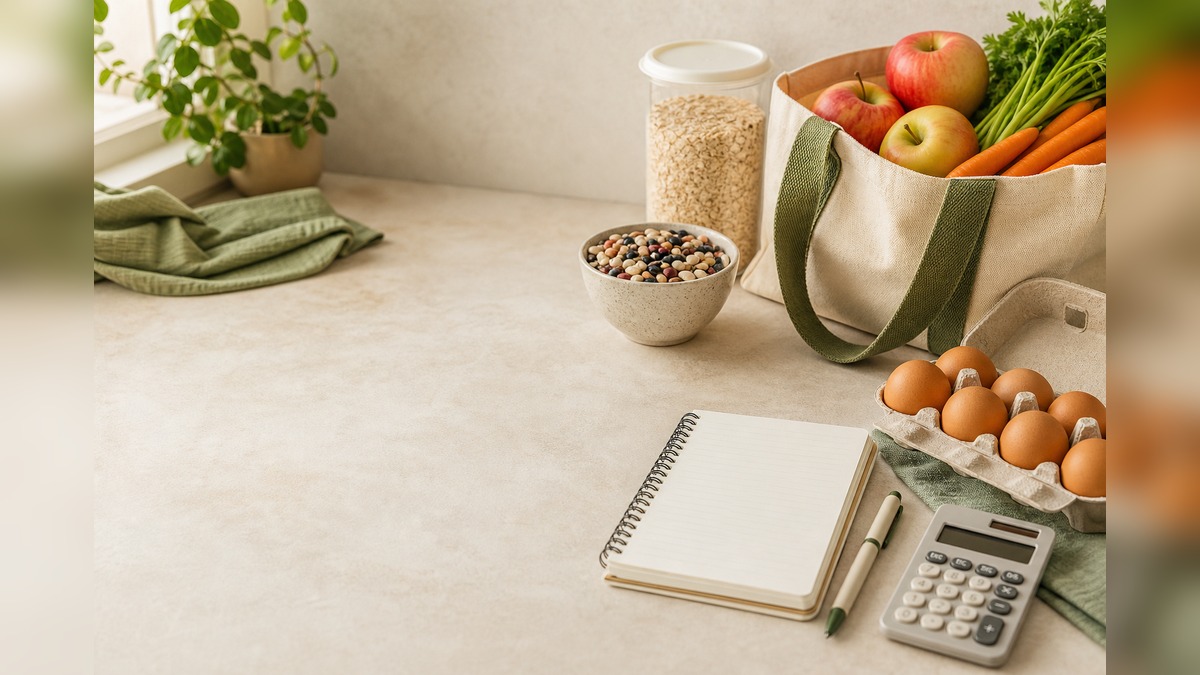
Grocery budget categories make food spending easier to see before you get to the checkout line. Instead of writing one long random list, you group food by how your kitchen actually works. That makes it easier to spot missing basics, duplicate snacks, and convenience items that quietly push the total higher.
A simple category system also helps you compare weeks. If your grocery bill jumps by $42, you can see whether it came from meat, snacks, household paper goods, or stocking up the pantry.
Grocery Budget Categories to Start With
Use these categories as your default weekly grocery list. You can rename them, but do not start with too many. A short list is easier to use than a perfect system you abandon after two trips.
| Category | What Goes Here | Budget Note |
|---|---|---|
| Produce | fruit, vegetables, salad kits, potatoes | buy what you will actually eat |
| Protein | eggs, chicken, beans, tuna, yogurt, tofu | plan around 2-3 main proteins |
| Grains and starches | rice, oats, pasta, bread, tortillas | choose cheap repeatable bases |
| Dairy or alternatives | milk, cheese, yogurt, non-dairy milk | check what is already open |
| Pantry staples | flour, oil, spices, canned goods | stock slowly, not all at once |
| Frozen foods | frozen vegetables, fruit, basic meals | useful for backup meals |
| Snacks and drinks | chips, crackers, soda, coffee extras | set a hard limit |
| Household basics | paper goods, dish soap, trash bags | separate from food when possible |
If you spend $125 per week on groceries and $28 of that is snacks and drinks, that category alone is 22% of the trip. That number is easier to adjust than a vague feeling that groceries are too expensive.
Why Categories Work Better Than One Long List
A long list tells you what to buy. Grocery budget categories tell you why the bill changed.
For example, two families can both spend $140, but the story may be different:
- Family A spent $55 on proteins because they stocked up on chicken and eggs.
- Family B spent $55 on drinks, packaged snacks, and convenience foods.
The total is the same, but the next step is not. Family A may have food for future meals. Family B may need a snack limit or a meal-prep backup.
A Simple Weekly Grocery Budget Formula
Start with your real average, not your dream number. Look at your last three grocery trips and average them.
Then divide the number into practical buckets:
| Weekly Total | Produce | Protein | Grains/Pantry | Dairy/Frozen | Snacks/Drinks | Household |
|---|---|---|---|---|---|---|
| $100 | $25 | $25 | $20 | $15 | $10 | $5 |
| $125 | $30 | $35 | $25 | $18 | $12 | $5 |
| $150 | $35 | $45 | $30 | $20 | $15 | $5 |
These are starter examples, not rules. A household with babies, pets, allergies, or high food prices may need different numbers.
Category 1: Produce
Produce is where good intentions can waste money. A fridge full of vegetables does not save anything if half of them go soft before Thursday.
Choose a short produce plan:
- 2 fruits for snacks or breakfast
- 2 vegetables for dinners
- 1 easy backup, like frozen broccoli or carrots
If your week is busy, buy fewer delicate items. Potatoes, carrots, cabbage, apples, and frozen vegetables usually give you more time than berries or salad kits.
Category 2: Protein
Protein can raise the bill quickly, so plan it before you shop. Pick two or three main proteins and build meals around them.
Examples:
- eggs for breakfast or fried rice
- chicken thighs for two dinners
- beans for soup, tacos, or bowls
- Greek yogurt for breakfast or snacks
- tuna for quick lunches
The goal is not the cheapest protein every time. The goal is protein you will actually cook.
Category 3: Grains and Pantry Bases
This category keeps meals flexible. Rice, oats, pasta, tortillas, potatoes, beans, and canned tomatoes can turn small ingredients into full meals.
A pantry base is especially useful when a planned meal fails. If you have rice, eggs, frozen vegetables, and soy sauce, you have a backup dinner without ordering takeout.
For budget planning, keep one shelf for open pantry items. Use those before buying more.
Category 4: Snacks and Drinks
Snacks are not bad. Unplanned snacks are the problem.
Give this category a number before shopping. For example:
- $10 for one person
- $15-$20 for a small household
- one salty snack, one sweet snack, one drink item
If you want more, trade it from another category. That makes the choice visible.
Category 5: Household Basics
Paper towels, dish soap, foil, laundry items, and trash bags make a grocery bill look higher even though they are not food.
Track them separately when possible. If a $128 grocery trip included $24 of household items, your actual food spending was $104.
This is also a good place to connect your grocery plan with a sinking funds categories list if bulk household purchases keep surprising the budget.
The 10-Minute Grocery Category Routine
Use this before shopping:
- Check fridge, freezer, and pantry.
- Pick 3-4 dinners you can realistically cook.
- Fill the categories from meals first.
- Add breakfast and lunch basics.
- Add snacks last.
- Add household items separately.
- Put a dollar limit next to the flexible categories.
This routine works well after a no spend challenge because it keeps the reset from turning into a rebound grocery trip.
Common Grocery Category Mistakes
Creating too many categories
If your list has 18 sections, you probably will not use it. Start with 6-8 categories.
Mixing household items with food
This makes the food budget look worse than it is. Separate them when possible.
Planning meals without checking the kitchen
The cheapest item is the one you already bought. Shop your kitchen first.
Letting snacks use the leftover money
Snacks should have a limit before you shop, not after the cart is full.
Helpful Source
Utah State University Extension’s meal-planning guidance covers taking pantry inventory, planning meals, and making a grocery list before shopping.
FAQ
What are grocery budget categories?
Grocery budget categories are simple groups for food and household spending, such as produce, protein, pantry staples, snacks, and paper goods. They help you see where grocery money goes.
How many grocery categories should I use?
Most households can start with 6-8 categories. If tracking feels annoying, use fewer categories and only separate the areas that change your bill the most.
Should household items be part of the grocery budget?
You can buy them at the grocery store, but it helps to track them separately. Paper towels and dish soap can make food spending look higher than it really is.
What grocery category is easiest to cut?
Snacks, drinks, and convenience foods are often the easiest categories to adjust first. Cutting one $6-$10 item per week can make the change feel manageable.
How do I start if I do not know my grocery average?
Use your last three grocery receipts and average the totals. Then try one small category limit, such as snacks or drinks, before changing everything.
Final Takeaway
Grocery budget categories turn a messy food bill into a simple plan. Start with a few categories, shop your kitchen first, and track the areas that actually move your total.