
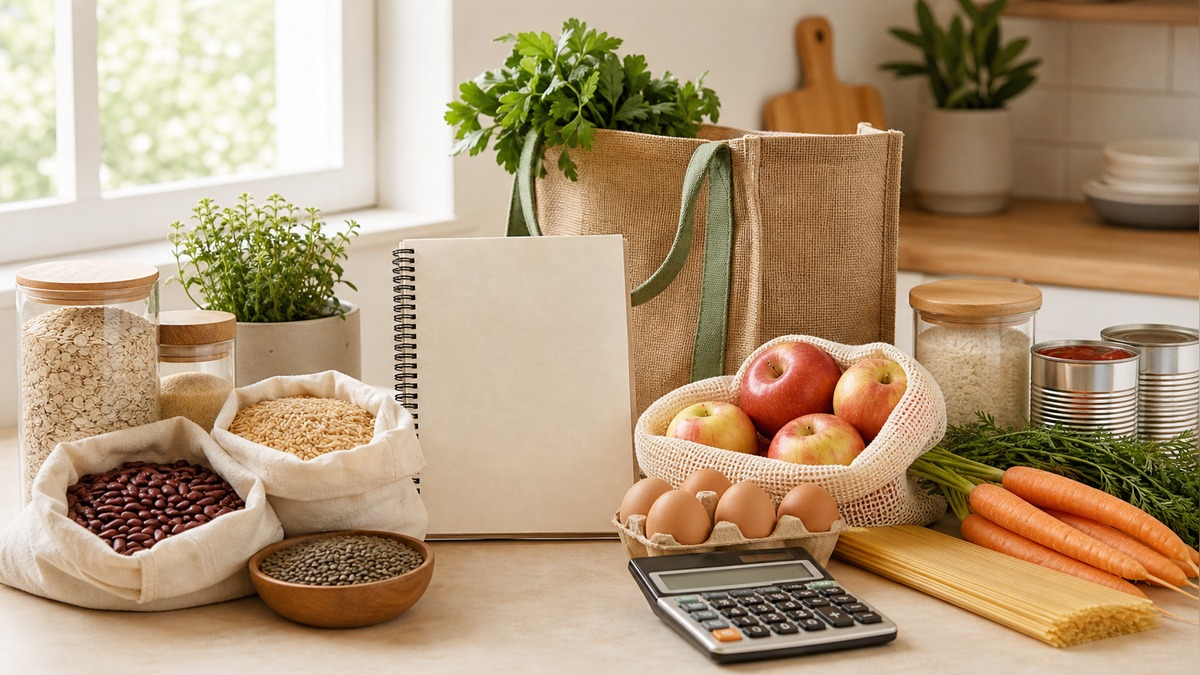
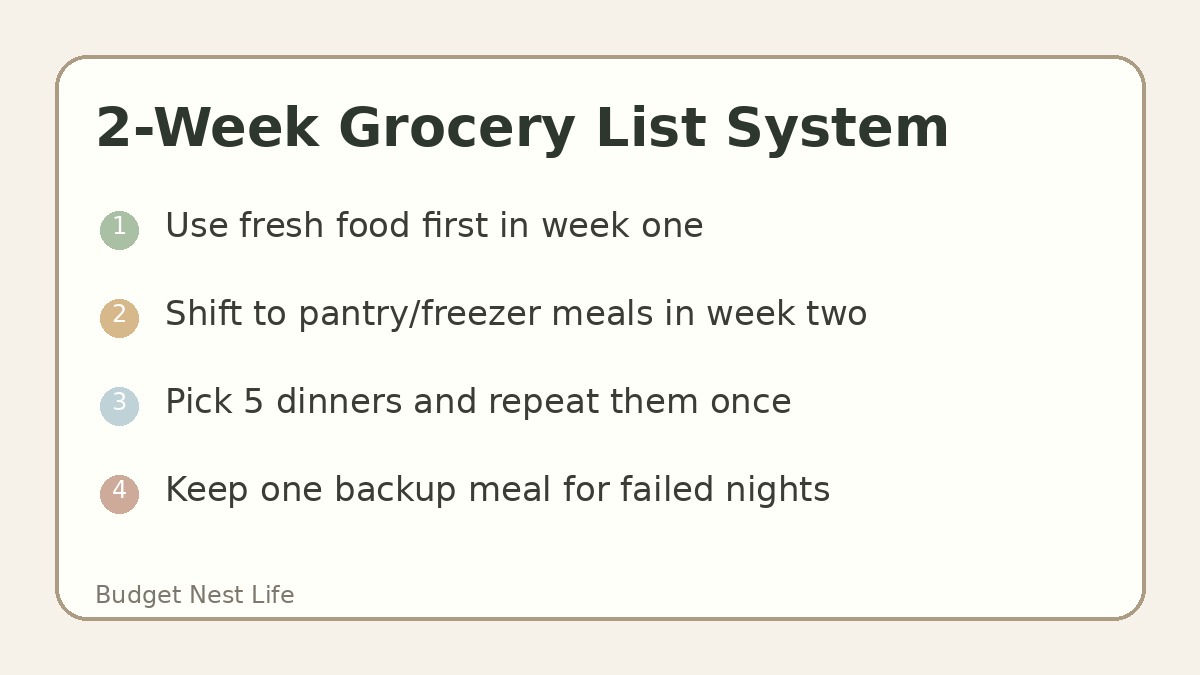
Need a cheap grocery list for two weeks that does not fall apart by day six? Start with this rule: buy fresh food for week one, shelf-stable and frozen food for week two, and repeat simple meals on purpose. That keeps the cart cheaper and stops the “nothing sounds good” problem that usually leads to takeout.
Quick answer: for two adults, build the list around 5 dinner anchors, 2 breakfast anchors, 2 lunch anchors, 3 produce choices, and 2 backup meals. If prices run high in your area, cut snack variety first; do not cut the backup meals.
The 10-Minute Two-Week Grocery Plan
Before you write the list, split the next 14 days into two jobs.
| Time Period | Main Job | Best Foods | Avoid |
|---|---|---|---|
| Days 1-5 | Use fresh food first | salad greens, berries, fresh bread, cooked chicken, yogurt | buying delicate produce with no meal attached |
| Days 6-10 | Stretch planned leftovers | rice bowls, soups, pasta, eggs, tortillas | pretending every dinner must be new |
| Days 11-14 | Use pantry/freezer backups | beans, canned tomatoes, frozen vegetables, oats, pasta | emergency takeout because the plan had no backup |
This is the part most cheap grocery lists miss. A low-cost cart is not useful if half of it spoils before the second week starts.
Cheap Grocery List for Two Weeks
Use this as a flexible starter list, not a strict rule. Prices change by city and store, so the goal is to control categories.
| Category | Two-Week Starter List | Budget Note |
|---|---|---|
| Breakfast | oats, eggs, yogurt, bananas, peanut butter, bread | repeat 2-3 breakfasts |
| Lunch | tortillas, rice, beans, tuna or chicken, soup ingredients | build lunches from dinner leftovers |
| Dinner proteins | eggs, beans, lentils, chicken thighs, ground turkey or tofu | choose 2 cheaper proteins and 1 flexible protein |
| Carbs | rice, pasta, potatoes, tortillas, oats | these carry the second week |
| Vegetables | frozen mixed vegetables, carrots, cabbage, onions, spinach | mix long-lasting + frozen |
| Fruit | apples, bananas, one seasonal fruit | buy fragile fruit only for week one |
| Pantry | canned tomatoes, broth, salsa, pasta sauce, spices | make cheap food taste different |
| Snacks | popcorn, carrots, crackers, apples | set a snack limit before shopping |
Budget Tiers That Actually Change the Cart
| Budget Level | Best For | What Changes |
|---|---|---|
| Tight reset | you need the cheapest workable cart | beans, eggs, oats, rice, pasta, frozen vegetables, fewer snacks |
| Balanced budget | normal two-week shop | add chicken, yogurt, fruit, tortillas, and one easy lunch protein |
| Busy-week buffer | you know time will be short | add two freezer meals or ready-to-cook backups before adding treats |
If three staples cost $2 more than expected, do not just add $6 to the total. Remove one snack, swap one meat dinner for beans, or move a fresh produce item to frozen.
A Simple 14-Day Meal Map
| Meal Type | Week 1 | Week 2 |
|---|---|---|
| Breakfast | oats, eggs, yogurt bowls | oats, toast, eggs |
| Lunch | turkey or tuna wraps, leftovers | rice bowls, soup, bean wraps |
| Dinner 1 | chicken rice bowls | bean and rice bowls |
| Dinner 2 | pasta with vegetables | pasta with canned tomatoes and frozen vegetables |
| Dinner 3 | breakfast for dinner | potato hash with eggs |
| Dinner 4 | soup or chili | leftover soup or chili |
| Dinner 5 | tortilla pizzas or quesadillas | pantry/freezer cleanout meal |
Repeating meals is not a failure. Repeating the right meals is what keeps the list cheap.
Store-by-Store Shopping Order
Do not start in the snack aisle. Use this order instead:
- Check pantry, fridge, and freezer at home.
- Add proteins and meal anchors first.
- Add carbs that stretch those proteins.
- Add produce with a specific use.
- Add dairy and breakfast items.
- Add snacks last with a fixed limit.
This order keeps the cart tied to meals instead of moods.
Common Mistakes That Make a Cheap List Expensive
Buying 14 different dinners
Four or five repeatable dinners are cheaper than 14 unrelated recipes. Variety can come from sauce, toppings, or sides.
Treating snacks like an unlimited category
Snacks can quietly become the most expensive part of a budget cart. Pick two snack types and finish them before buying more.
Forgetting the “I am too tired” meal
Every two-week plan needs one backup dinner that takes almost no thought: eggs and toast, bean quesadillas, pasta with sauce, or rice with frozen vegetables.
Buying produce without a deadline
Berries, greens, and fresh bread need a week-one job. Apples, carrots, cabbage, onions, potatoes, and frozen vegetables can carry more of the second week.
Two-Week Price Check Formula
Use this quick formula before checkout:
| Question | If Yes | If No |
|---|---|---|
| Do I have 5 dinners? | move on | add one pantry dinner |
| Do I have 2 backup meals? | move on | add pasta/beans/eggs |
| Did snacks pass the limit? | keep them | remove one snack |
| Will fragile produce be used in 5 days? | keep it | swap to frozen or longer-lasting produce |
| Is there a lunch plan? | move on | add tortillas, rice, or soup ingredients |
A cheap grocery list for two weeks works because each item has a job. If an item does not belong to breakfast, lunch, dinner, backup meals, or planned snacks, question it before it goes in the cart.
Helpful Source
For basic budgeting guidance, see Consumer.gov’s budgeting guide. Use it to set the grocery number first, then build the list around that number.
FAQ
What is the cheapest way to grocery shop for two weeks?
Plan repeat meals around low-cost staples such as oats, eggs, rice, beans, pasta, potatoes, frozen vegetables, and one or two affordable proteins. Buy fragile fresh food only for the first week.
Is it better to shop weekly or every two weeks?
Weekly shopping is easier for fresh produce. Two-week shopping can save time and impulse buys if you separate week-one fresh food from week-two pantry and freezer meals.
How many dinners should I plan for two weeks?
Plan five or six dinner anchors and repeat them. Add two backup meals for nights when the original plan is too much work.
What should I cut first if the cart is over budget?
Cut extra snacks, drinks, duplicate condiments, and fragile produce with no meal plan. Keep the backup dinners because they prevent takeout.
Realistic Two-Week Cart Example
Here is one practical way to turn the system into a cart. Adjust brands and quantities for your household.
| Meal Job | Items |
|---|---|
| Breakfasts | oats, eggs, bread, peanut butter, bananas, yogurt |
| Lunches | tortillas, tuna or chicken, rice, beans, soup ingredients, carrots |
| Dinners | pasta, canned tomatoes, frozen vegetables, chicken thighs, potatoes, onions, eggs |
| Backup meals | bean quesadillas, tomato pasta, egg-and-toast dinner |
| Snacks | popcorn, apples, crackers or carrots |
The important part is not copying every item. The important part is checking that every item belongs to a meal job. If you buy tortillas, they should support lunches, quesadillas, and maybe breakfast wraps. If you buy rice, it should support bowls, leftovers, and backup dinners. Multi-use items make a cheap grocery list more flexible.
How to Make It Less Boring
Cheap does not have to mean the same flavor for 14 days. Change the sauce or topping instead of changing the whole meal.
| Base Meal | Version 1 | Version 2 | Version 3 |
|---|---|---|---|
| rice + protein | salsa bowl | soy-style bowl | tomato-bean bowl |
| pasta | red sauce | garlic vegetable pasta | tuna pasta |
| eggs | toast | potato hash | tortilla wrap |
| beans | rice bowl | soup | quesadilla |
This is how you keep variety without buying a separate ingredient list for every dinner.
Quick Pantry Check Before You Shop
Open the pantry and write down only what can become a meal. A half box of crackers is not dinner. Rice, pasta, canned tomatoes, beans, tuna, broth, potatoes, oats, and frozen vegetables are meal builders. Put those on the plan first so the grocery trip fills gaps instead of creating duplicates.
Final Takeaway
A cheap grocery list for two weeks is not just a list of cheap foods. It is a timing system: fresh food first, pantry and freezer food later, and backup meals ready before the week gets messy.