
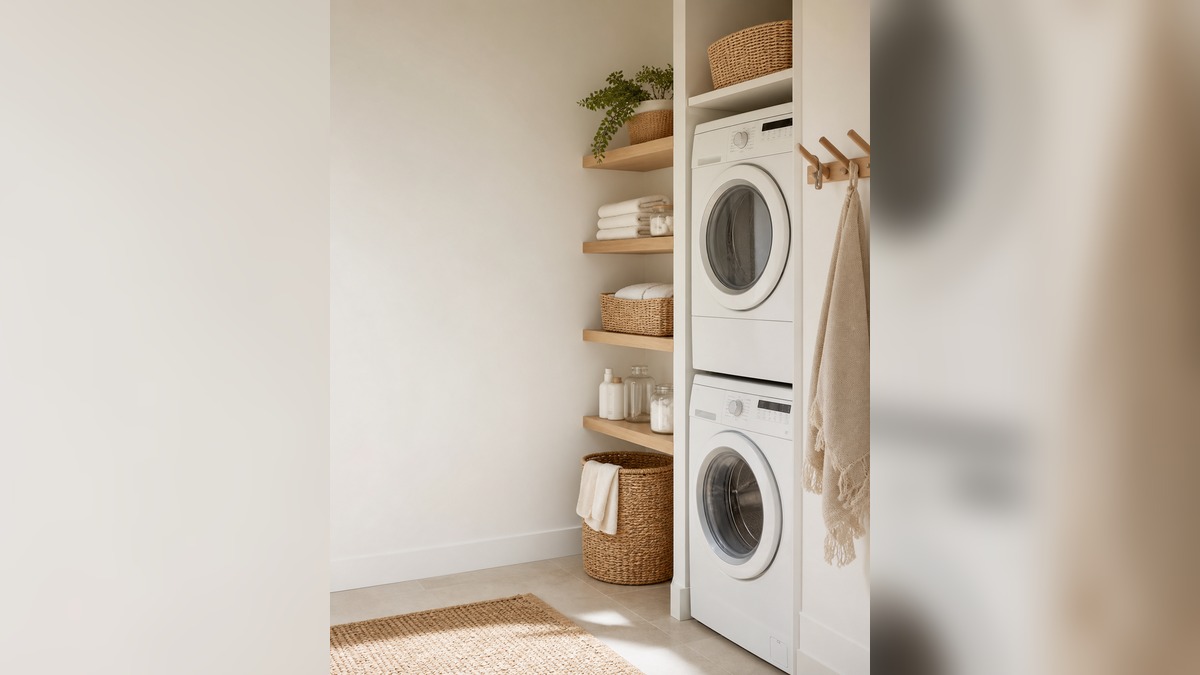
If laundry piles spill into the hallway, the room does not need a full makeover first. It needs one clear path: dirty clothes in, supplies within reach, clean clothes out, and nothing blocking the washer, dryer, or walkway.
Fast win: Spend 15 minutes clearing the machine top, making one supply bin, and setting one cup for pocket items and lost socks. Keep the lint filter and dryer vent path easy to reach; do not stack baskets, bottles, or towels where they block airflow or controls.
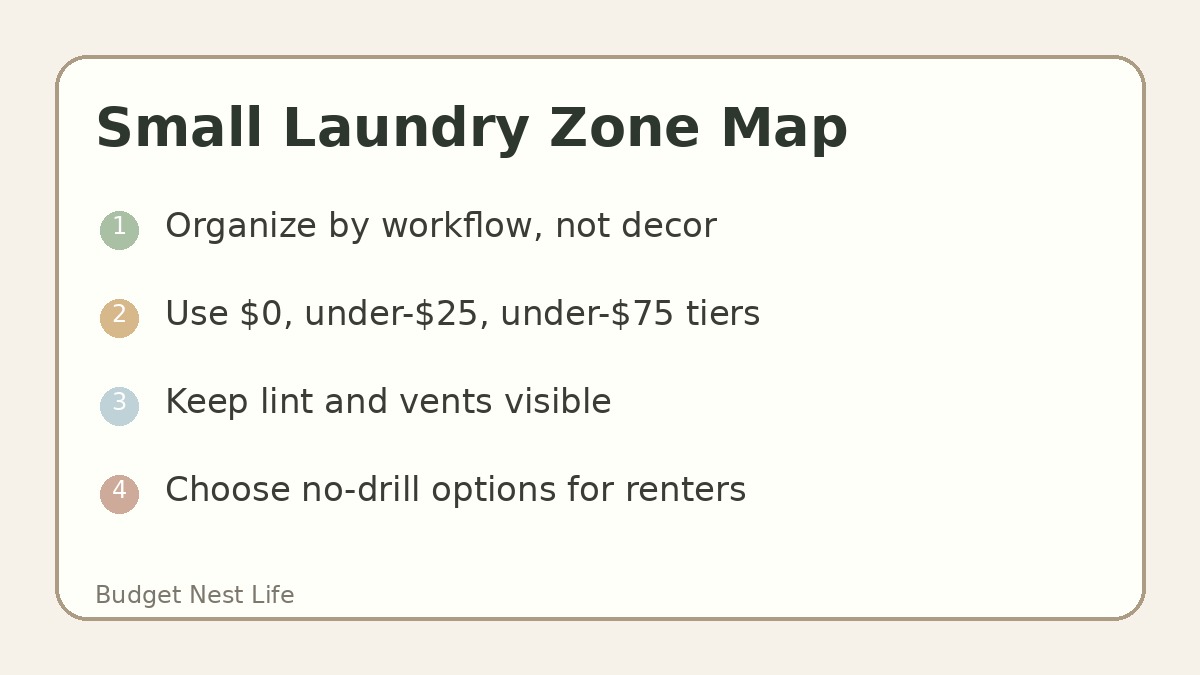
15-Minute Laundry Zone Map
| Zone | What belongs there | Small-space setup | Budget fix |
|---|---|---|---|
| Sort | lights, darks, towels, delicates | one hamper or two labeled bags | $0 labels made from tape |
| Supply | detergent, stain tool, dryer balls | one open bin near the washer | about $5-$12 basket |
| Drying | hang-dry pieces and lint routine | hooks, tension rod, or folding rack | $8-$15 hooks or rod |
| Fold/out | clean clothes leaving the area | bed, table, or one basket rule | no furniture required |
| Reset | pocket finds, lost socks, empty bottles | small cup plus trash spot | reuse a jar or mug |
Why Small Laundry Rooms Need Workflow First
Laundry room organization small space ideas should start with the order of the job, not with storage products. A closet laundry area, apartment hallway washer, or narrow utility room has little margin for bulky bins. If a new cart blocks a door, hose, or walkway, it becomes another problem.
Think of the laundry area as a tiny work station. Dirty clothes enter, products help the wash happen, clothes dry, clean items leave, and the area resets. When one step has no home, laundry spreads. Pocket items sit on the machine. Detergent bottles multiply. Clean clothes become a second dresser.
Step 1: Clear the Machine Top Without Creating a New Pile
The top of the washer or dryer often becomes the default shelf. Clear it in three passes.
First, remove trash, empty bottles, lint, receipts, and pocket scraps. Put trash directly in a bag. Second, move any product you have not used in a month to a review spot. Third, return only daily laundry items to one supply zone.
Daily items might include detergent, stain remover, dryer balls, a mesh bag, and clothespins. Put them in one open bin so the top of the machine can be wiped quickly. If you use pods, keep them stored safely according to package directions and away from children or pets. Do not leave loose pods in an open bowl because it looks tidy.
Step 2: Create a Sorting Rule That Fits the Room
A small laundry room cannot hold five large hampers unless the room was built for them. Use the smallest sorting rule that still prevents floor piles.
| Household situation | Sorting rule | Why it works |
|---|---|---|
| One adult or couple | one hamper plus one delicates bag | fewer decisions and less floor clutter |
| Family with kids | two hampers: clothes and towels | easy for kids to follow |
| No laundry room door | one lidded hamper outside the area | hides mess without blocking machines |
| Shared apartment laundry | one portable basket and one supply pouch | everything travels together |
| Work uniforms or sports gear | one labeled priority bag | urgent items stop disappearing |
Do not copy a mudroom system if you have a closet. If one hamper section overflows while another stays empty, switch to a simpler rule.
Step 3: Give Supplies One Visible Home
Laundry supplies are easy to overbuy because sales make backups feel responsible. A budget-friendly laundry room keeps the open product visible and backstock limited.
Try this supply limit:
- one open detergent
- one stain tool
- one dryer aid, such as wool dryer balls or sheets
- one mesh bag for delicates
- one backup only if you have a specific backstock spot
This connects organization to spending. If Target has a detergent sale but you already have two unopened jugs and no safe shelf for them, the deal may not help your home. Use the same thinking as things to stop buying to save money: skip the duplicate when storage is already full.
For a $0 setup, reuse a plastic bin, old dishpan, or sturdy box. For a low-cost upgrade, a shallow basket from Walmart or Target around $5-$12 is usually enough. Measure shelf depth before buying so the basket does not hide the stain tool you need most.
The Measure-Before-You-Buy Storage Test
Before buying shelves, carts, or over-door organizers, test the space with real measurements.
| Measurement | Check this first | Skip the purchase if |
|---|---|---|
| Width | space beside machines, not just wall width | it touches hoses, trim, or door frames |
| Depth | how far a cart sticks into the walkway | you have to turn sideways to pass |
| Height | shelf clearance above bottles | bottles scrape or lie sideways |
| Door swing | closet, cabinet, and machine doors | doors hit the organizer |
| Reach | can you grab items without moving laundry? | the shelf is too high for weekly use |
This test prevents the classic small laundry mistake: buying a storage piece that technically fits but makes the room harder to use. A $35 rolling cart is only a good deal if it rolls out, holds real supplies, and does not block a door.
Step 4: Add Vertical Storage Only Where It Solves a Job
Vertical storage can rescue a small laundry room, but it should serve a specific job. Use wall hooks for hang-dry pieces, a narrow shelf for daily supplies, or a tension rod for shirts that need to air dry.
Avoid heavy glass jars on high shelves, especially over machines that vibrate. Avoid baskets stacked so high that you cannot see inside. In a renter space, choose removable hooks and lightweight bins first.
Step 5: Choose One Folding and Put-Away Rule
Many small laundry rooms have no folding counter. That is fine. The mistake is pretending the room has a folding zone when it does not.
Pick one realistic fold/out rule: fold on the bed before bedtime, fold towels at the kitchen table, use one clean basket that must be emptied before the next load, or hang shirts directly from the dryer. The rule needs a finish line. “I will fold later” is not a system. “The clean basket must be empty before another load starts” is a system. This same finish-line idea works in other tight spaces, including small apartment entryway organization.
Budget Tiers for Small Laundry Room Organization
Start with the lowest tier that fixes the repeat problem. You can always upgrade after the room proves what it actually needs.
| Tier | Best use | Example fixes | Watch out for |
|---|---|---|---|
| $0 reset | clutter, duplicates, no clear zones | reuse a bin, tape labels, cup for pocket items | do not save supplies you never use |
| About $15 | no hang-dry spot or loose supplies | hooks, small basket, tension rod | measure door swing and bottle height |
| About $35 | narrow gap or no shelf | slim rolling cart, sturdy over-door organizer | skip if it blocks hoses or walkway |
| About $75 | larger weekend fix | mounted shelf, folding wall rack | renter rules and safe installation matter |
Safety Notes for Dryers, Vents, and Walkways
A laundry area should be organized enough to stay safe. Keep the lint filter easy to reach and clean it as part of the routine. Keep the area behind and around the dryer accessible enough to notice lint buildup, crushed venting, or items that fell behind the machines. The clothes dryer fire safety flyer from the U.S. Fire Administration is a helpful reference for lint filter and venting reminders.
Do not store paper towels, loose cloth, or cleaning rags on top of a dryer where heat and vibration can move items around. Do not stack heavy bottles above shoulder height. Keep a walkway open so you can move a full basket without tripping. If a shelf, cart, or hamper makes it harder to reach shutoffs, plugs, or doors, it is not a good small-space solution.
Common Small Laundry Room Mistakes
Buying baskets that block the walkway
A basket that forces you to step sideways will not feel organized for long. Fix it by measuring the walking path with the basket in place and switching to a taller, narrower hamper if needed.
Keeping every detergent because it was on sale
Three half-used products take more space than one product you actually like. Fix it by finishing one open detergent before opening another and keeping only one measured backup if you have room.
Using high shelves for heavy bottles
Heavy jugs above shoulder height are awkward and easy to drop. Fix it by storing heavy liquids low and using upper shelves for light items like dryer balls, mesh bags, or extra hangers.
FAQ
What is the best laundry room organization small space first step?
Clear the machine top and create one supply bin. That gives the room a work surface, makes products visible, and shows whether you need storage or just fewer extras.
How do I organize a laundry closet with no shelves?
Use one portable supply bin, a small hook or tension rod if allowed, and one hamper rule outside the closet. Keep the doors and machine controls clear.
Are rolling carts good for small laundry rooms?
They can be useful beside side-by-side machines, but only after measuring width, depth, hose clearance, and walkway space. Skip a cart if it blocks access.
How much should I spend on small laundry room storage?
Start with $0 for one week. If the same problem repeats, try an about $15 fix such as hooks, a small basket, or a tension rod before buying larger furniture.
How do I keep a small laundry room organized every week?
Reset after the last load: trash lint, return supplies, empty the pocket cup, move clean clothes out, and check supplies before shopping.
Final Takeaway
Laundry room organization for small spaces works when every load has a clear path through the room. Start with a 15-minute zone map, keep supplies in one visible home, measure before buying storage, and protect the lint, vent, door, and walkway areas from clutter. The best small laundry room is the one that helps clean clothes leave the space faster.