
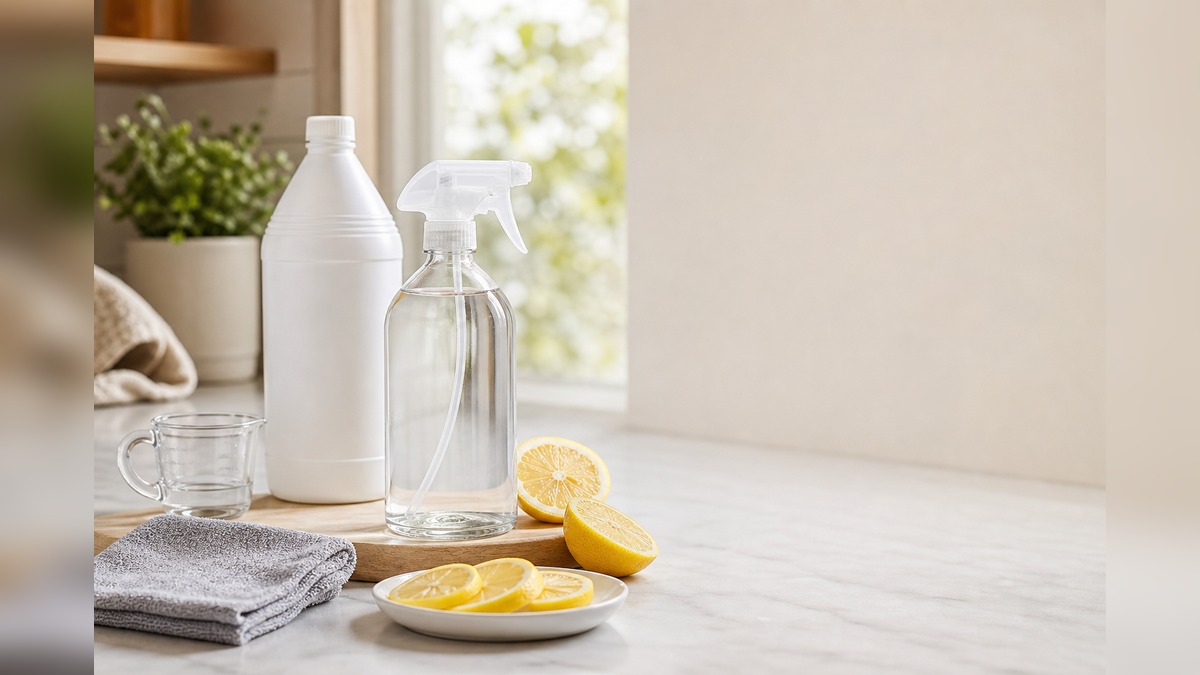
Vinegar cleaning solution recipes are useful for simple wipe-downs, glass, mineral spots, and deodorizing jobs. They are not a replacement for every cleaner, and they should not be mixed with bleach. If you only remember one rule, remember this: vinegar is for routine cleaning on the right surfaces, not for disinfecting every surface in the house.
Start here: mix one small bottle of 1:1 vinegar and water, label it, test it on a hidden spot, and use it for a low-risk job such as a sink wipe or glass cleaning. Do not use it on natural stone.
Vinegar Cleaner Safety Rules
| Rule | Why It Matters |
|---|---|
| Never mix vinegar with bleach | can create dangerous fumes |
| Do not call vinegar a disinfectant | use an EPA-registered disinfectant when disinfection is needed |
| Avoid natural stone | acids can etch marble, granite, limestone, and some tile |
| Test first | finishes and sealants vary |
| Label the bottle | prevents mystery mixes under the sink |
This article keeps the recipes simple on purpose. A budget cleaning shelf should be safer and easier, not full of unlabeled bottles.
Vinegar Cleaning Solution Recipes
| Cleaner | Ratio | Best For | Avoid |
|---|---|---|---|
| Basic vinegar spray | 1 part white vinegar + 1 part water | sinks, some counters, trash can wipe-downs | stone, wood finishes, electronics |
| Glass spray | 1 part vinegar + 2 parts water | mirrors and plain glass | screens and coated surfaces |
| Hard-water cloth soak | vinegar diluted with water | faucet mineral spots | long soaking on delicate finishes |
| Microwave steam wipe | bowl of water + splash of vinegar | loosening stuck food | overheating or handling hot bowl carelessly |
| No-vinegar backup | warm water + small amount of dish soap | delicate surfaces | leaving soap residue unrinsed |
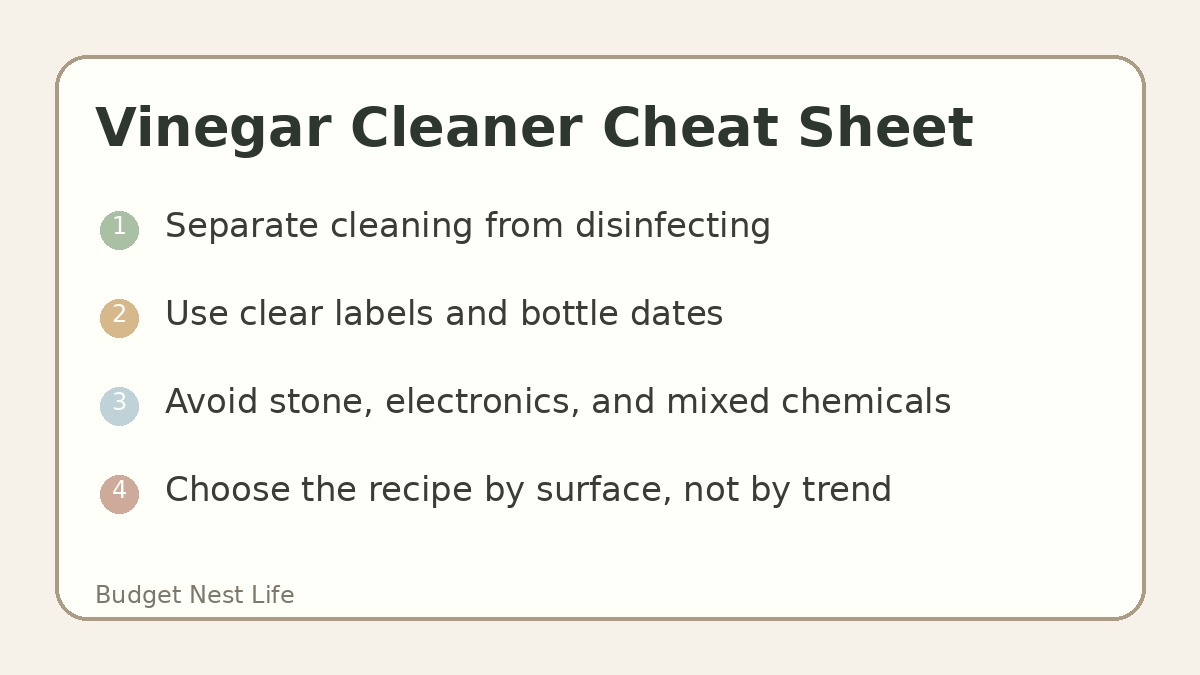
Where Vinegar Works Best
Glass and mirrors
Use the lighter 1:2 mix. Spray the cloth instead of soaking the surface. Wipe with a clean microfiber cloth to avoid streaks.
Sink and faucet spots
Use a damp cloth with diluted vinegar for mineral spots. Rinse after wiping, especially around metal finishes.
Trash can refresh
Wipe the inside with the basic spray, then let it dry fully before replacing the bag. If the odor is from old spills, wash with dish soap first.
Microwave wipe-down
Heat a microwave-safe bowl of water with a splash of vinegar until steam loosens food. Let it sit briefly, handle carefully, then wipe the inside.
Where Not to Use Vinegar
| Surface or Situation | Use Instead |
|---|---|
| Marble, granite, limestone, stone tile | mild dish soap and water, stone-safe cleaner |
| Electronics and screens | manufacturer-approved screen cleaner |
| Hardwood floors | floor product recommended by the finish manufacturer |
| Mixed with bleach | never mix; use one product at a time |
| Illness cleanup needing disinfection | disinfectant with label directions |
The safest budget rule is boring but effective: if you are unsure, use dish soap and water first.
A Simple Cleaning Caddy Setup
You do not need ten homemade sprays. Start with this:
- One labeled vinegar-water bottle for approved surfaces.
- One bottle of dish soap.
- Microfiber cloths.
- Gloves if your skin is sensitive.
- One disinfectant for situations that actually need disinfecting.
- A marker and tape for labels.
This setup pairs well with a simple cleaning schedule for busy people because each product has a clear job.
Common Mistakes
Making a huge batch
Small batches are better. A big bottle that sits for months becomes another mystery item under the sink.
Adding essential oils without thinking
Scent does not make a cleaner safer or stronger. If you use scent, keep it light and consider pets, kids, allergies, and surface safety.
Using vinegar because it is “natural”
Natural does not mean safe for every surface. Vinegar is acidic, and acid can damage some materials.
Cleaning and disinfecting as if they are the same
Cleaning removes dirt and residue. Disinfecting uses a product labeled for killing specific germs. The label matters.
Budget Comparison
| Item | Approximate Use | Budget Lesson |
|---|---|---|
| Reusable spray bottle | one-time purchase | only worth it if you refill it |
| White vinegar | repeated low-cost refills | useful for approved surfaces |
| Dish soap | many delicate surfaces | often safer than vinegar |
| Specialty cleaner | stone, electronics, special finishes | buy when damage risk is higher than savings |
A cheap cleaner is not cheap if it damages a countertop, floor, or appliance finish.
Helpful Source
For cleaning versus disinfecting guidance, see the CDC cleaning and disinfecting guidance. Follow product labels when disinfection is needed.
FAQ
What is the best vinegar and water ratio for cleaning?
A common starter mix is 1 part white vinegar and 1 part water. For glass, a lighter mix such as 1 part vinegar and 2 parts water is often easier to wipe clean.
Can vinegar disinfect surfaces?
Do not rely on vinegar as a disinfectant. For illness cleanup or germ-specific claims, use a properly labeled disinfectant and follow the contact time on the label.
What should vinegar never be mixed with?
Never mix vinegar with bleach. Also avoid mixing cleaners in general unless the product label specifically says it is safe.
Can I use vinegar on granite or marble?
No. Vinegar is acidic and can damage natural stone. Use a stone-safe cleaner or mild dish soap and water.
Label Template for Homemade Cleaners
Every homemade cleaner should have a plain label. Use this format:
| Label Field | Example |
|---|---|
| Mix | 1:1 white vinegar + water |
| Made on | July 6 |
| Use for | sink wipe, glass, trash can refresh |
| Avoid | stone, bleach, screens, wood finish |
| Test first? | yes |
This takes less than one minute and prevents the “what is in this bottle?” problem. If a bottle is not labeled, do not keep it under the sink.
When Dish Soap Is the Better Budget Choice
Vinegar gets a lot of attention because it is cheap, but mild dish soap and water is often the safer first try. Use dish soap for greasy residue, food-contact surfaces that need a rinse, delicate finishes, and surfaces where acid might be a problem. The budget win is choosing the least risky cleaner that does the job.
One-Caddy Cleaning Routine
Use vinegar for the jobs it handles well, then keep the rest simple:
- Start with trash and dry crumbs.
- Use dish soap and warm water for greasy surfaces.
- Use diluted vinegar only on approved mineral spots, glass, or deodorizing jobs.
- Rinse surfaces that touch food.
- Use disinfectant only when the job calls for disinfecting.
- Put the bottle back with the label facing out.
This routine keeps the cleaning shelf smaller and safer. It also reduces the temptation to create a new homemade recipe for every tiny problem.
Final Takeaway
Vinegar cleaning solution recipes can save money when they are simple, labeled, and used on the right surfaces. The win is not replacing every cleaner; it is knowing exactly when vinegar is useful and when it is not.